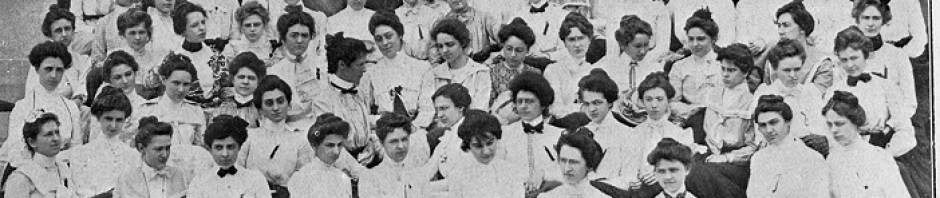
Until this year, the numbers 20/20 indicated normal visual acuity. Those of us living through the year 2020 realize there is little that is normal about it. Covid-19 has made life interesting, to say the least. Several of the National Panhellenic Conference (NPC) organizations came up with a novel way of initiating women who were unable to become full members during the spring semester. Virtual initiation became an actual thing. I’m quite sure no one had that on their strategic planning bingo card 25 years ago. An Alpha Epsilon Phi chapter at Concordia University in Montréal was installed virtually and it likely started a trend. And now many women are going through sorority recruitment virtually or in a hybrid situation. Flexibility is a mainstay of almost all fall recruitments.
Primary sorority recruitment is a mutual selection process. Potential New Members (PNMs) rank their choices based on the Preference Parties they attended and then the PNMs are matched up with the chapter that offers them a bid, based on where the PNM appears on the chapter’s ranked bid list. It sounds like a complicated process and it is. Sometimes the PNM doesn’t get her first choice. Sometimes this causes much angst for the PNM (and perhaps her mother, grandmother, etcetera, etcetera).
Some PNMs are fine with whatever chapter appears on their bid card, but a few women decide not to accept the bid they are given and drop out of recruitment. It’s not always easy and while the grass always looks greener on the other side of the fence, adjusting dreams is a good lesson for the rest of one’s life. Blooming where one is planted is a skill which can come in handy throughout life. This year we are all getting a booster shot for this skill.
It’s all hard to explain to a 17 or 18-year-old who feels like she is the only one in the situation. All 26 NPC organizations are essentially the same, and one will have a similar experience in any of the groups. While our colors, badges, flowers, songs, etc. are all a little different, at the core, we believe in the same values. We are all sorority women.
This heartwarming story was posted several years ago by my Zeta Tau Alpha friend Gabbie Rimmaudo. For a time, she worked at Pi Beta Phi HQ and I loved that she would stop by the Archives when I was there. She loves fraternity history. I showed her the letter we have which was signed by Dr. May Agness Hopkins, who served as ZTA President. Her thoughts on getting her second choice chapter brought tears to my eyes and I told her so. I hope Gabbie’s story can resonate with some women who accepted bids to their second or third choice chapters. I hope they will embrace the opportunities that may be in their future.
The University of Illinois was founded in 1867, but it took more than 25 years for the first sorority to appear on campus. On November 15, 1894, Andrew Sloan Draper became the University’s fourth president. His predecessors had been opposed to Greek letter organizations (GLOs), but he was more favorable to them.
By 1894, there were chapters of women’s fraternal organizations at several Illinois colleges including Knox College, Lombard College, Northwestern University, and Illinois Wesleyan University. Additionally the state universities in the neighboring states of Michigan, Ohio, and Indiana had burgeoning sorority systems. When the academic year opened in the fall of 1894, there were 80 females enrolled at the University of Illinois. Some of the women likely knew of women’s fraternities on Midwestern campuses. Two local women’s groups were formed. Although neither had a formal name, it was understood that each group sought charter from a national women’s fraternity.
One of the groups became a chapter of Kappa Alpha Theta and the other became a Pi Beta Phi chapter. The race to become the first national women’s fraternity chapter at the University of Illinois is a most interesting tale.
On June 8, 1875, the Illinois Alpha chapter of Kappa Alpha Theta was founded at Illinois Wesleyan College in Bloomington. The effort to establish the chapter was led by the Indiana University chapter. When Theta renamed chapters in 1881, it became the Delta chapter as it was then the fourth oldest chapter in existence. Although the chapter was almost 20 years old, the number of women enrolling at Illinois Wesleyan had decreased. The number of women initiated into the IWC Kappa Alpha Theta chapter was 127, about six women a year. In 1895, the chapter was in a precarious position due to lack of members.
Four of the female students at the University of Illinois – Marion Wright, Bertha Pillsbury, and sisters Isabel and Mary Noble – met with a Kappa Kappa Gamma alumna in the summer of 1895. The Kappa alumna suggested the group petition her organization for a charter. The alumna had a new baby and did not follow through on her the suggestion, according to a memory from one of the four.
Katherine Merrill, a member of the Illinois English department, was a Kappa Alpha Theta alumna from the University of Kansas chapter. Faculty spouse Elizabeth Lowell Hammond was an alumna of the Theta chapter at Syracuse University. Mary Ross Potter, an Illinois Wesleyan Theta who was a member of the faculty at IWC, corresponded with President Draper’s secretary. Potter and Sheila Means, a member of the IWC chapter traveled from Bloomington and met with Merrill, Hammond and the women who were seeking a charter. They had a tea with the women who were hoping to become members of a national organization.
The following morning, the IWC Thetas invited the Illinois women to accept their chapter’s charter. The action would need to be approved by the Theta convention body which was meeting October 1-3, 1895.
Meanwhile, Jessie Davidson [Gerber], an initiate of the Knox College chapter of Pi Beta Phi, was taking classes at the University. One of the women in her Knox College class, Grace Lass [Sisson], was Pi Beta Phi’s Grand President. Before she headed to Urbana-Champaign, Davidson and her Pi Phi friends talked about the possibility of a chapter at Illinois. On September 14, 1895, Davidson wrote Lass about the possibility of establishing a chapter. Correspondence ensued.
The Illinois Wesleyan delegate to the Kappa Alpha Theta convention in Syracuse, NY, made the case for transferring the charter to the women at the University of Illinois. It was approved by the convention body.
On October 7, 1895, Davidson wrote her friend, the Pi Phi Grand President, “When I wrote to you about the prospect of a chapter of Pi Beta Phi here I never dreamed that I would ever try to get a chapter here….About ten girls have been spoken to. They are very nice girls and I know that you would like them. Grace, could you come down here?” The group made a formal petition for the Grand Council.
This is what an 1890s petition looked like, In the early 1900s, they became books full of pictures and copies of letters.
Davidson wrote Lass again, “Do you think it possible for us to have our charter, if we can have it, by the 25th of this month? There is a dance, a fine affair, that night and they (the Thetas) want to come out in their colors, and then we want you here too.” She added that an escort was lined up to take Lass to the dance. Davidson offered her a place to stay during her visit.
Apparently, the petition was successful and arrangements were made for Lass to install the chapter. Due to Lass’ schedule, the installation took place on October 26, 1895. Nellie Lapham Swigart, an alumna of the Lombard College chapter, opened her home for the festivities.
The charter members were Amelia “Meme” Darling Alpiner [Stern], Edith Marie Weaver [Gilhulely], Blanche C. Lindsay [Wood], Martha Vivian Monier [Morrissey], Laura E. Busey [Fulton], Nellie Besore [Sears], Edith M. Yoemans, Anne B. Montgomery [Bahnsen] and Lelia White.
Amelia Alpiner Stern and her daughter Dorothy Stern Washburn served in the American Red Cross. Amelia was a charter member of the Pi Beta Phi chapter and is said to have been the first Jewish student to graduate from the University. She served as Pi Phi’s Grand Secretary. Dorothy was a 1920s initiate of the chapter.
A banquet followed. Later that night, at about midnight, the chapter had a Cookie Shine, a Pi Phi tradition, in Davidson’s room.
The transfer of the Theta charter was approved at the Convention in early October. The date of the charter transfer was October 24, 1895. However, the group of women were not initiated into Kappa Alpha Theta until November 9, 1895. Thetas came from Bloomington, Chicago and the Northwestern and DePauw chapters for the installation festivities.
In addition to the original four who met with the Illinois Wesleyan Thetas, there were nine other charter members. They were Mary Greene, Ida Conn, Mabel Zilly, Marion Thompson, Georgia Bennett, Reba Wharton, Blanche Herrick, Louise Jones and Ruth Raymond.
Congratulations to Kamala Harris, Senator from California and the Democratic Vice Presidential candidate. She is a woman of firsts including the first sorority woman to make it on to a major Presidental ticket. While a student at Howard University, she became a member of Alpha Kappa Alpha Sorority, Inc.
This seems to be the first Presidential election since 1968 where none of the major party candidates has a degree from Harvard or Yale. Senator Harris is the first graduate of one of the Historically Black Colleges and Universities to run on a major ticket. Howard University is also the founding place of Alpha Kappa Alpha Sorority, Inc.
I look forward to posts about the support of her Alpha Kappa Alpha sisters. Several articles have been written in the press about this and a quick search will bring up several, including this one published months ago.
I loved this graphic of the colors of the Biden-Harris logo in the colors of each of the four Divine Nine sororities.
The logo done in the colors of the 4 NPHC sororities – Alpha Kappa Alpha, Delta Sigma Theta, Zeta Phi Beta, and Sigma Gamma Rho.
A Suffrage Parade took place on March 3, 1913, in Washington, D.C. Among the women who marched were sorority/fraternity women.
Pi Beta Phi’s former Grand President Emma Harper Turner was one of the marchers joining the George Washington University collegians and alumnae. Goucher College collegians and alumnae were in full force, too, as the campus in Baltimore was within easy traveling distance. Edna L. Stone, an alumna of the Pi Beta Phi chapter there, wrote an account for the Arrow of Pi Beta Phi. Several Kappa Alpha Theta members from the Goucher chapter also marched. Marching in the parade was one of the first activities that the founders of Delta Sigma Theta did after creating the sorority at Howard University.
Alpha Chi Omega, Myra Jones, who would later serve as Alpha Chi’s National President, wrote in the April 1913 Lyre of Alpha Chi Omega,
For months before it took place it was the subject of the liveliest comment by friends and foes alike and of headlines by the press; and for weeks afterward, thanks to those who opposed and ridiculed and jeered, it has enjoyed even greater publicity.” She went on to comment, “No woman who, without protection in this our capital city, struggled though that irresponsible mob, subjected to jeers and insults on every side, can ever again be lukewarm or indifferent on the subject of women’s suffrage.
Emilie Margaret White, an alumna of the Pi Beta Phi chapter at George Washington University, marched. She was one of those women who was subjected to the jeers and insults of anti-suffrage men who were in town for Woodrow Wilson’s inauguration. She graduated with a undergraduate degree in three years, studied twice in Europe and earned a Master’s from George Washington University. Although she was a teacher of Latin and German at Central High School, she marched with the college students. She was a member of Columbian Women, an organization of many of the first women to attend the university who organized to help other women become college graduates. The Columbian Women award a scholarship named in her honor. She later provided testimony to the Senate Committee (her name was misspelled as Emily). As a testament to the strength of character, I am including all of her testimony.
The witness was duly sworn by the chairman
The Chairman: What is your full name?
Miss White: Emily (sic) Margaret White.
The Chairman: Where do you live?
Miss White: 2568 University Place.
The Chairman: You are one of the teachers here?
Miss White: Yes.
The Chairman: You were in the teachers section of the parade?
Miss White: I marched with the college women with the group from the George Washington University.
The Chairman: Were you on the Avenue before the parade occurred?
Miss White: I was, yes.
The Chairman: What time did you reach the Avenue on the 3rd of March?
Miss White: I think it was between half past 1 and 2. I arrived at the Capitol about 2.
The Chairman: Where did you first reach the Avenue at the Treasury Building?
Miss White: Yes, at the Treasury.
The Chairman: You reached there at about what time?
Miss White: I should judge about half past 1 or a quarter after 1.
The Chairman: And you came from there down the Avenue?
Miss White: Yes.
The Chairman: What condition did you find the Avenue in?
Miss White: At Fifteenth Street the people seemed there were many people standing there in crowds but they were behind the ropes on the sidewalk. Beyond Twelfth Street I did not notice the Avenue. The car was very crowded and I did not notice it again until I reached the Capitol.
The Chairman: So you cannot say what the condition was?
Miss White: No.
The Chairman: You saw ropes along the curbing?
Miss White: I saw them as far as I observed the Avenue.
The Chairman: And the crowd packed behind them?
Miss White: Yes.
The Chairman: What time did you start in the parade?
Miss White: I think it was 20 minutes past 3 that our section started.
The Chairman: When you reached the Peace Monument what was the condition?
Miss White: The people were all standing behind the ropes and the police seemed to be in control of them.
The Chairman: Were there police there?
Miss White: Yes there were police.
The Chairman: Do you remember how many policemen you saw about the Peace Monument?
Miss White: I remember two at the place I observed them.
The Chairman: Were they in uniform.
Miss White: They were.
The Chairman: What were they doing?
Miss White: They were pushing back the crowd.
The Chairman: I understood you to say the crowd was all behind the ropes.
Miss White: The crowd was pushing forward and they kept them back there.
The Chairman: Were they walking then in front of the crowd on the Avenue close to the curb?
Miss White: I am referring now to the place at the Peace Monument at the curbing along there.
The Chairman: Yes.
Miss White: They walked in a very small radius.
The Chairman: That was around the monument?
Miss White: Yes.
The Chairman: What about the street?
Miss White: The Avenue up to between Third and Four and a half Street was well cleared.
The Chairman: Were all the people there practically behind the ropes?
Miss White: I think so. No, they were not behind the ropes. They were out in the street and they were pushing forward toward the car tracks.
The Chairman: Were there any policemen along there.
Miss White: There was one policeman in uniform and one in plain clothes dress and an officer. The officer was ordering the other two men to push back the crowd and they were doing it just as well as it was possible to do at that point.
The Chairman: You say at that point, where do you mean?
Miss White: Between up in the first two squares beyond the Peace Monument.
The Chairman: Were there no policemen walking up and down the Avenue to keep the crowd back?
Miss White: I saw these three in just two squares.
The Chairman: They were not walking up and down the Avenue were they?
Miss White: They were pushing the people back. They were doing it with physical force.
The Chairman: At that particular place.
Miss White: At that particular place.
The Chairman: Did they keep the crowd back very well there?
Miss White: They did pretty well on those two squares.
The Chairman: Were these policemen close together?
Miss White: Yes they were right together.
The Chairman: Working right together?
Miss White: The three. The two men under orders from the officer.
The Chairman: What was the officer doing?
Miss White: He was walking along up the square and ordering the men to keep them back and he was himself trying to keep them back.
The Chairman: In front of the crowd?
Miss White: Yes.
The Chairman: Did they seem to keep the crowd back pretty well?
Miss White: They did pretty well in that one place.
The Chairman: Did you have plenty of room for marching there?
Miss White: In those two squares.
The Chairman: Did you march four or five abreast?
Miss White: Four abreast.
The Chairman: What was the condition after Fourth Street?
Miss White: Between Third and Four and a half Streets the crowd surged out so that we marched with our arms overlapping and it grew worse until we got to Seventh Street where the crowd was so dense that it was then necessary to fall out and march in double file.
The Chairman: Were there any policemen there after you got past Third Street?
Miss White: Yes. I saw a number of policemen in uniform and a great number of plain clothes men.
The Chairman: What were they doing?
Miss White: They seemed to be making no effort whatever to keep the crowd back.
The Chairman: Were they just standing in the crowd?
Miss White: They were standing in the crowd and laughing and joining in with the crowd.
The Chairman: And the crowd was getting closer and closer all the time?
Miss White: It was crowding so it was very difficult to walk I was afraid there might be violence at that point when we got to Seventh Street.
The Chairman: You saw no policemen from Third to Seventh Streets making any efforts to keep the crowd back?
Miss White: As I remember, no.
The Chairman: No mounted police along there?
Miss White: I saw no mounted police until we got in front of the New Willard Hotel.
The Chairman: What was the condition from Seventh Street on?
Miss White: I should say from Seventh Street to Twelfth Street the march was equally difficult. Twice in that time we had to fall out and march in double file. The crowd were pressing around just as closely as they could and once a man started to cross over between the line of march but changed his mind and went back and there was no policeman there to prevent him at all.
The Chairman: Then did anything happen along there that you think you ought to tell the committee about?
Miss White: I have here a signed statement from one of the captains of the High School companies. Shall I give it to you? It is what he heard and I heard myself another thing.
The Chairman: You may tell what you heard.
Miss White: I heard a policeman when the crowd pushed forward very hard he made no effort whatever to push them back. He said with a laugh, ‘Stop pushing or you will get me into this procession.’ I heard another I am not sure it was a policeman. It was either a policeman or the man next to him.
Senator Pomerene: Can you identify that first policeman?
Miss White: I cannot.
Senator Pomerene: Or give us any means of identifying him?
Miss White: I have no means of identifying him.
The Chairman: Was he in uniform?
Miss White: Yes, in uniform in regular uniform. This other one as I say I am not sure was a policeman. It may have been the man next to him who in an attempt to imitate a woman’s voice said ‘Stop pushing please,’ but made no effort to stop the pushing.
The Chairman: What is the substance of the statement you have? Of course it is not evidence but perhaps it will lead us to some evidence.
Miss White: One policeman went up to this boy as he stood at Fifteenth Street and Pennsylvania Avenue and he said ‘Why do you not kid the women more?’
The Chairman: What is the name of the boy?
Miss White: J.E. Hoover.*
The Chairman: Do you know where he lives?
Miss White: I do not know.
The Chairman: He is the high school captain?
Miss White: Yes.
The Chairman: Of what school?
Miss White: Central High School.
The Chairman: He was not one of the Boy Scouts was he?
Miss White: No he was not.
The Chairman: You do not know whether he took the number of this policeman’s badge?
Miss White: He did not, he said.
The Chairman: Are there any other facts you desire to call to the attention of the committee?
Miss White: I think that is all I have to say.
The Chairman: Did you see any personal indignities offered to anybody in the parade?
Miss White: No I did not.
Senator Dillingham: You say, Miss White, that the police were laughing with the crowd. What were they laughing at?
Miss White: They were laughing at the remarks the crowd made. I happened to be marching next to the young lady who carried the George Washington University banner and that was made the butt of many remarks. The police seemed to enjoy the remarks as much as anybody in the crowd. They laughed with the others.
The Chairman: That is all.
Coeds from George Washington University get ready to march. In 1913, there were three NPC organizations on campus – Pi Beta Phi (1889), Chi Omega (1903), and Sigma Kappa (1906).
* J.E. Hoover is J. Edgar Hoover. He graduated from Central High School in 1913 and was the class valedictorian. He entered George Washington University that fall as a law student in the night school, in the days before an undergraduate degree was required for law school.
On June 13, 2020, the Phoenix Panhellenic Association made this announcement about its Centennial celebration:
We have made the difficult decision to go virtual on August 8th and move to the evening. The restrictions for social distancing in a ballroom and bringing together 390 people during this pandemic was not in the best interest of our guests. If you feel safe we do encourage you to consider hosting viewing parties (10 or less) at members’ individual homes.
We know this is not how we wanted to Celebrate Centennial. The event has never been about a fancy ballroom or the food, it’s been about Engaging, Inspiring, and Empowering Women. We can still do that virtually!
We promise this is not a Zoom “meeting”, it will be a show. A show you don’t want to miss!
Mari Ann Callais, Theta Phi Alpha, is the guest speaker. If you’ve never been in the audience for one of her sessions, now is the time to tune in. Artist Tiesha Harrison will LIVE paint during the event. The emcee is Colin Tetreault.
You can read more about the celebration. It includes profiles of the women who are being honored and a history of the organization written by Susan Norman, Delta Zeta.
What was life like for women the women who founded Pi Beta Phi and Kappa Kappa Gamma at Monmouth College, in 1867 and 1870, respectively? It certainly was quite different than it is for the women enrolled in Monmouth College today.
Monmouth College opened on September 3, 1856 and was incorporated about six months later on February 17, 1857. Included in the 1869-70 Monmouth College catalog were the names and hometowns of all students as well as professions of alumni. There were 219 alumni listed in the catalog. Graduation class size ranged from 4 in 1858 to 39 in 1869.
In 1870, less than one percent of all females aged 18 through 21 years were enrolled in higher education, according to Mabel Newcomer. Those who attended coeducational institutions sought support systems and friends with whom they could share their educational pursuits.
Although most colleges had literary and debating societies that females could join, some women were seeking closer ties. There were four literary societies at Monmouth College, two for men and two for women. The Philadelphian and Eccritean were male societies. Amateurs des Belles Lettres (ABL) and Aletheorian were the female literary societies.
The men’s fraternity system had been established and chapters were located at many colleges. Therefore, there was a model upon which to create women’s fraternities. The women’s fraternity movement began in the Midwest soon after the end of the Civil War. I.C. Sorosis, today known by its original Greek motto, Pi Beta Phi, was founded on April 28, 1867 at Monmouth College in Illinois. It was an institution supported by the Presbyterians.
Kappa Alpha Theta came to life at Indiana Asbury University (now DePauw University), a Methodist supported institution in Greencastle, Indiana, in January of 1870. Kappa Kappa Gamma made its debut at Monmouth College in October of that year.
In 1870, Monmouth, Illinois, was a city of 6,000. It was accessible via the Chicago, Burlington and Quincy Railroad and the Rockford, Rock Island and St. Louis Railroad. The 1869-70 catalog boasted “Ladies and Gentleman are admitted to all the privileges of the College on the same footing.” It appears that about a third of the students during that academic year were women.
At that time, Monmouth’s library had 1,500 volumes. The collection of James Barnett, D.D., who spent 17 years as a missionary at Cairo, Egypt, had been purchased by the College. It contained “ancient coins, geological specimens from Sinai and regions about the Red Sea, and many articles of interest to students of Bible History.” There was also a cabinet of geological specimens from the state of Illinois.
1869-70 Monmouth College catalog, courtesy of Hewes Library
The expenses for the college year were about $30. Music students were charged for lessons and piano time. “Soldiers and Soldiers’ children, unable to pay, are admitted to all the privileges of the College without charge for tuition,” according to the catalog. It was also noted that the Trustees might need to increase the $2.00 incidental fee for the following year.
There were no residence halls. Students boarding in private homes were notified it cost $4 or $5 per week to do so. Two of Pi Beta Phi’s founders rented a room and boarded at the home of Jacob Holt.
Monmouth College offered two degrees. The “A.B.” was awarded to students who completed and passed examinations in the Classical course. “B.S.” degree was conferred on those who completed and passed exams in the Scientific course. For the 1869-70 academic year there were 370 students enrolled in all courses, including the Preparatory and Mercantile programs. The Mercantile program consisted of single entry bookkeeping course and one on business forms. The Preparatory program was a high school type program to prepare students for collegiate study.
1869-70 Monmouth College catalog, courtesy of Hewes Library
Women’s fraternities provided their members a safe haven, moral support and academic encouragement. Until 1881, when Alpha Phi’s second chapter was established at Northwestern University, only four groups – Delta Gamma, Kappa Alpha Theta, Kappa Kappa Gamma, and Pi Beta Phi – formed chapters beyond the founding campus. The National Panhellenic Conference began in 1902. It fostered cooperation on campuses and added structure to the recruitment practices of the organizations.
The staircase the Pi Beta Phi founders climbed while on their way to the founding of the organization at Holt House in Monmouth, Illinois
Alpha Gamma Delta was founded at Syracuse University on May 30, 1904 at the home of Dr. Wellesley Perry Coddington, a Syracuse University professor. It is the youngest of the Syracuse Triad, the three National Panhellenic Conference organizations founded at Syracuse University. The other two, Alpha Phi and Gamma Phi Beta, were founded in 1872 and 1874, respectively.
By 1901, all seven of the founding National Panhellenic Conference organizations had chapters at Syracuse. Dr. Coddington felt that the campus needed another women’s fraternity. He approached several young female students and discussions ensued. Though excitement started to grow, the women managed to keep very quiet the possibility of another organization on campus. Edith MacConnell was recovering from a serious accident and was a patient at the Homeopathic Hospital. Not even the nurses attending to her had any idea what was taking place, despite the steady stream of visitors to her room.
The announcement in the Daily Orange, the school’s newspaper, noted:
A new Greek-letter fraternity has been organized among the women of the university. The name is Alpha Gamma Delta and the members thus far are: Marguerite Shepard, ’05; Jennie C. Titus, ’05; Georgia Otis, ’06; Ethel E. Brown, ’06; Flora M. Knight, ’06, Estelle Shepard, ’06; Emily H. Butterfield, ’07; Edith MacConnell, ’07; Grace R. Mosher, ’07; Mary L. Snider, ’07.
Four of the Alpha Gamma Delta Founders are in this picture.
Celebrating Founders’ Day on May 30 became difficult for chapters, especially if the chapter’s school year ended in mid-May. In 1936, the celebration of Founders’ Day was replaced by International Reunion Day (IRD). It takes place on the third Saturday of April. I was invited to speak to the Alpha Gams in Southern Illinois this year, but the event was cancelled due to the pandemic.
Emily Butterfield
Founder Emily H. Butterfield was an architect and an authority on fraternity heraldry. She designed the Alpha Chapter’s home at 709 Comstock Avenue which was completed in the fall of 1928.
Her best known sketches are the ones she did of “Skiouros,” Alpha Gamma Delta’s squirrel mascot when she was editor of The Quarterly. To Skiouros was the name of the “secret edition” of The Quarterly. (FYI – the secret editions of GLO magazines contained membership numbers and information about chapter strengths and weaknesses and not anything having to do with ritual matters. These editions were not sent to the other GLOs in exchanges. )
“Why are some National Panhellenic Conference (NPC) groups women’s fraternities and some are sororities?” is a question I am often asked. It’s a tough one because the 26 NPC organizations are typically referred to as sororities in everyday conversation (i.e. sorority recruitment, office of fraternity and sorority life, etc.). In this blog I find myself referring to all the NPC members as sororities, even though I know fully well that the majority are women’s fraternities or fraternities for women. Trying to be true to those designations gets difficult; for ease of reading I have gone to the colloquial “sororities.”
Credit for this dilemma is given to one man, Dr. Frank Smalley, a professor at Syracuse University. Gamma Phi Beta was founded at Syracuse in 1874. Eight years later, Gamma Phi Beta’s second chapter was founded at the University of Michigan. After the chapter was installed and the two delegates returned to Syracuse, an announcement about the new chapter appeared in the newspaper. On the following day, Smalley made his now-famous comment, “I presume that you young women are now members of a sorority,” thereby coining the word and bringing it into modern usage.*
In the October 1912 Crescent of Gamma Phi Beta, Smalley explained his use of the word, “It appears to me that the use of the word ‘sorority’ to indicate a college Greek-letter society of young women needs no defense. It is to some extent a question of taste. The word ‘fraternity’ when used of such a society seems a little forced, although the comprehensive use of masculine terms to include women, sometimes justifies it. However, when we have a Latin form sororities, which is specific and exact, why should not the English form ‘sorority’ be used with the same exactness as we observe in the ordinary use of the pronouns he and she?” The roots of the word “fraternity” are in “phratia,” the Greek word meaning people who hold a common interest as well as the Latin word “fraternitas.”
Frank Smalley
On October 13, 1884, Smalley’s sister, Honta Smalley (Bredin), became a member of the Beta chapter; in 1888, she helped found its Epsilon Chapter at Northwestern University and served as Gamma Phi’s first national president. Smalley’s daughter, Carrie Elizabeth, was a member of Gamma Phi Beta’s Alpha Chapter.
Of the 26 NPC organizations, more than half are officially a women’s fraternity or a fraternity for women. Those officially a sorority are Alpha Delta Pi, Alpha Epsilon Phi, Alpha Sigma Alpha, Alpha Sigma Tau, Delta Phi Epsilon, Delta Zeta, Gamma Phi Beta, Kappa Delta, Sigma Delta Tau, Sigma Kappa, and Sigma Sigma Sigma. All four National Pan-Hellenic Council women’s organizations are sororities.
*Sir Thomas More (Saint Thomas More to Catholics) used the word “sorority” in the early 16th century. It is not known whether Smalley knew of More’s usage of this word.
The 1918-19 catalogue of Wesleyan College states “No student under any circumstances will be allowed to join a sorority or other secret society.” Wesleyan College in Macon, Georgia, was the founding home of Alpha Delta Phi and Phi Mu. Yet by 1918, neither organization had an active chapter at the college.
Alpha Delta Pi was founded as the Adelphean Society in 1851. It took on Greek letters in 1905 and joined what it today the National Panhellenic Conference in 1909. Phi Mu was founded as the Philomathean Society in 1852. It took on Greek letters in 1904 and became a member of NPC in 1911. That year a chapter of Zeta Tau Alpha was installed on the campus. It was followed by a chapter of Delta Delta Delta in 1913. What happen between 1904 when Phi Mu took on Greek letters and 1917 when the Veterropt, Wesleyan’s yearbook, noted “sororities are dead” at the college? They “passed away very suddenly in the spring of nineteen fourteen, and for three long years they have been lying in state in their respective halls. The final interment will take place this commencement with the passing of the nineteen seventeen sisters.”
Wesleyan’s website mentions concerns in the early 1900s about “the impact the sororities were having on the student body.” The early 1900s was when the two societies took on Greek letters and it would seem that the faculty was against this move. The August 1912 Adelphean told of the resignation on the organization’s Historian, Newell Mason, a Wesleyan faculty member. According to the report:
College authorities are violently opposed to sororities. The faculty’s opposition recently took the form of an edict that no teacher or instructor at the college should enter the hall of a sorority of which she is a member. The records of ADP since 1851 are in the sorority’s hall at Wesleyan, but since Miss Mason has been barred by the mandate of the powers from access to the hall and the records, her work as historian has been made most difficult. As the records cannot be moved from the hall, Miss Mason has decided that in justice to the sorority and to herself it is best that she resign in favor of some sister, who will not be hampered by a faculty prejudiced against college secret organizations.
On March 25, 1914, Ann Octavia Nickelson Bass, wife of the former president of the college, Rev. William Capers Bass, died. An Alpha Delta Phi history written in 1929 includes a 1914 report of its Alpha chapter. Mrs. Bass was not an Adelphean, but she was an honorary member of the society. She helped “in the fight against sororities a few years ago, her allegiance to our cause had a great weight with the trustees of Wesleyan.” With her voice no longer able to provide support, the trustees seemed to make their move.
A report of the Zeta Tau Alpha chapter in a 1914 Themis notes:
Pan-Hellenic is also up in arms against the recent ruling our of sororities at Wesleyan. At our last meeting we passed a resolution to take the matter up and fight for a reversal of their decision. One of the Wesleyan trustees told us it would be worthwhile for us to try it.
1917 Veterropt
The June 4, 1914 issue of the Tuskegee News tells of the death of sororities at Wesleyan College. According to the article, the trustees had been working to abolish the organizations for ten years. A vote had been taken at the trustees meeting in Macon. The board was “found to be practically unanimous in favoring that course.”
The Wesleyan website reiterates that the trustees, “acting on faculty recommendation, voted to end all social sororities on campus.” They prohibited the creation of any new chapters. Initiated members were allowed to continue meeting until graduation. When the last members graduated in 1917, the sororities were gone from Wesleyan College.
Postscript
And although a number of NPC organization were founded at women’s colleges, their place there was problematic. The July 1914 Banta’s Greek Exchange has an article about the Wesleyan situation which begins, “May would seem to be the month when anti-sorority germ gets in its deadliest work. A year ago it was Barnard sorority life that fell under its blight; this year it is Wesleyan’s.”
Alpha Omicron Pi was founded at Barnard College, the women’s coordinate of Columbia University (in the late 1800s and early 1900s, creating a coordinate college for women was the way older men’s schools got around admitting women). In 2011, AOPi installed a chapter at Columbia University giving it the Alpha designation since women are now admitted to Columbia. Barnard College is still a women’s college, but Barnard women can join the Columbia sororities. The Barnard situation of 1913 deserves its own post and its on my list.
Goucher College in Baltimore had one of the largest sorority systems at a women’s college. When the campus moved from the city to Towson, Maryland, in the early 1950s, the sororities were not invited to make the move.
When America was in the midst of World War II, women had limited opportunities to be of service. Some women became WAVES. Established by Public Law 689 on July 30, 1942, the official name of the WAVES, the acronym for Women Accepted for Volunteer Emergency Service, was the U.S. Navy Women’s Reserve. It was authorized for the war and six months thereafter. Sadly, the women who enlisted, including many sorority women, are in their 90s. Soon there will be none to tell their own story.
Smith College in Northampton, Massachusetts, was the site of the first Naval Training School for women officers; 9,000 of them were trained there. Former First Lady Grace Goodhue Coolidge, a Pi Beta Phi alumna, lived in Northampton. From 1942-45, the Navy set up shop on the Smith campus, taking over several buildings for training. Mrs. Coolidge loaned her home, Road Forks, to Captain and Mrs. Herbert W. Underwood while he was in command of the program. Mrs. Coolidge accompanied the Underwoods when they went to Hunter College in New York to review the WAVES there.
In the Winter 2000 Arrow, Josephine Crook Rich, a Knox College Pi Phi, recounted her experience as a WAVE. She was recommended for the program and she left her job as an accountant with General Electric. She was sent to Smith College for training. While there, she discovered that there were Pi Phis among the members of her WAVE training class. The Pi Phis knew that Mrs. Coolidge lived in Northampton and they invited her to tea.
Mrs. Coolidge gave her account of the meeting in a Round Robin letter she wrote to her Pi Phi friends:
A couple of weeks ago, I had a note from a Pi Phi Wave saying that those whom they had been able to round up among the Waves were planning to have a tea to-gether at the Mary-Marg* tea room and would I join them. I got me out my best bib and tucker and found about twelve of them on the door-step waiting for me. A friend of one who was here to visit her took our pictures and we went in to-gether for our tea.
They came from the following chapters: California Delta (UCLA), Wisconsin Alpha (University of Wisconsin), Florida Beta (Florida State University), Iowa Gamma (Iowa State University), Florida Alpha (Stetson University), Vermont Beta (University of Vermont) and Illinois Beta-Delta (Knox College). There were two from two of the chapters. A grand group of girls and Capt. Underwood and visiting Admirals from time to time have expressed themselves as well pleased with the way in which these girls take to the training.
The former First Lady was a prolific letter writer and she sent the Pi Phis thank you notes.
A blurb on the Smith College website tells more about the program:
By the end of the war over 83,000 women were serving in the Navy, a number significantly over the original estimate of 11,000. They filled positions such as parachute riggers, pharmacist’s mates, instrument flying trainers, store keepers, radio dispatchers, clerks, mechanics, lab technicians, mail carriers, decoders, and navigators. Most of the officers were restricted to the rank of lieutenant with the notable exception of Captain Mildred McAfee (the president of Wellesley College) who was the director the WAVES. Soon after peace was declared in 1945, the WAVES and SPARS programs were dismantled and the women who had been in the Navy returned to their homes or civilian jobs.
*The Mary-Marg was the Mary-Marguerite Tea Room at 21 State Street. It opened in 1920. Owners Mary W. Wells and Marguerite L. Hawks sold the business in 1952, and it continued under different ownership into the 1960s.
There are many posts on this blog. Use the search button to find the posts about your organization.
Welcome!
Welcome! Chances are good you found this blog by searching for something about fraternities or sororities.
I was the last person anyone would have suspected of joining a sorority in college. I am sure I would have agreed with them, too.
When I made my way to Syracuse University, I saw the houses with the Greek letters that edged Walnut Park, and wished I could tour them. My roommate suggested I sign up for rush (as it was then called, today it’s known as recruitment) and go through the house tour round and then drop out of rush. It sounded like a plan. I didn’t realize that I would end up feeling at home at one of the chapters. And that I would become a member.
In this blog I will share the history of GLOs and other topics. I wrote a dissertation on “Coeducation and the History of Women’s Fraternities 1867-1902.″ It chronicles the growth of the system and the birth of the National Panhellenic Conference.
My Master’s thesis details the history of the fraternity system at Southern Illinois University Carbondale from 1948-1960. The dates are significant ones and the thesis is available on the top menu.
I have done research at the Student Life Archives and have written several histories of University of Illinois fraternity chapters for the Society for the Preservation of Greek Housing.